Wall Street megadonors are already shopping for a Republican nominee not named JD Vance.
Liberal pundits are busy pricing in a Republican civil war that drags on for two years.
And Vance just made one quiet calendar decision that has the whole crowd guessing.
JD Vance Set a Clock the Donor Class Can’t Speed Up
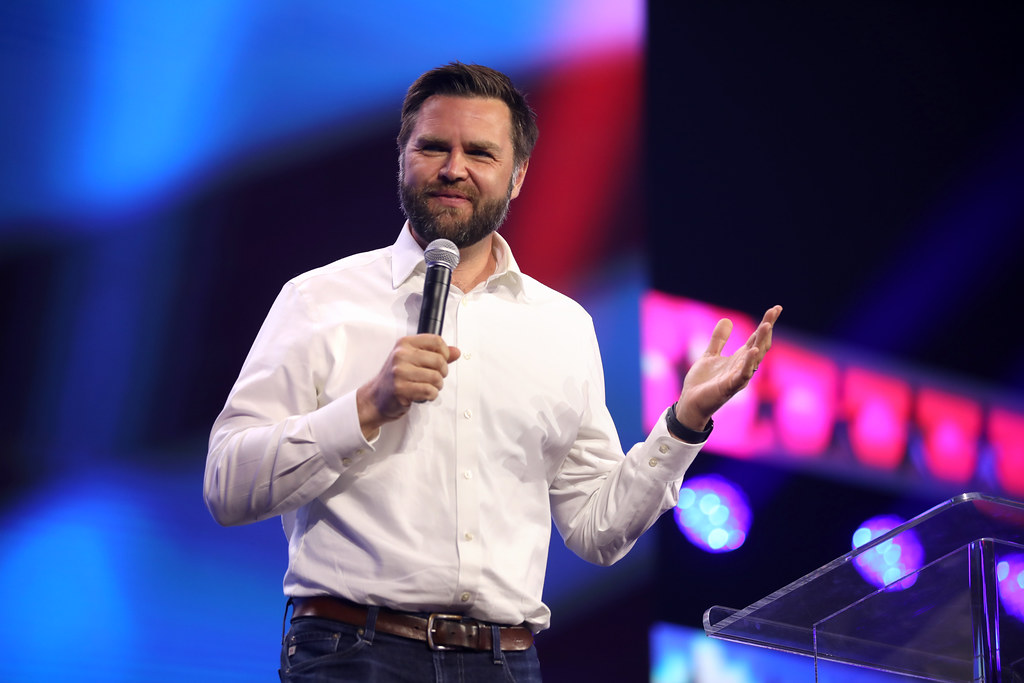
Vice President JD Vance won’t make a final call on 2028 until after the new year, and he may keep the public waiting until late spring, according to two sources who described his plans to Axios.
People who know his thinking say he genuinely hasn’t decided. He and his wife, Usha, are still hashing it out as a family after the arrival of their fourth child.
His advisers mapped out that timeline before the midterms. And nobody gets to pin it on Election Night jitters.
But the most revealing line in the report sits further down the page. Vance worries that jumping in too early would drag the spotlight away from President Trump and risk rubbing the boss the wrong way.
That instinct is about as common in Washington as a balanced budget. Most politicians with a shot at the Oval Office would sprint through a church bake sale to reach the nearest microphone.
His closest political advisers reportedly think he should run and probably will. And his allies insist the midterm losses haven’t knocked him off the front-runner perch, pointing to his donor network, his political infrastructure, and a name every Republican voter already knows.
The Whigs Tried This Trick Once Before
Axios ran through the rest of the possible field right after that: US Senator Ted Cruz (R-TX), Secretary of State Marco Rubio, former Virginia Governor Glenn Youngkin, Georgia Governor Brian Kemp, and Florida Governor Ron DeSantis.
Cruz’s team has already held meetings about a run, according to people familiar with his operation. That fits the pattern. Cruz ran as the Never Trump candidate in the 2016 primary, and since then he’s opposed Trump’s tariffs, objected to the $5,000 rebate checks, resisted Trump’s drive to negotiate an end to the Iran conflict, and taken subtle shots at the America First foreign policy Vance champions while donors listened. The donors pining for the pre-Trump party want a neoconservative standard-bearer, and Cruz keeps auditioning for the part. Even some Cruz allies told Axios they doubt he could seriously challenge Vance.
Rubio has said over and over that he’d back Vance. Citadel billionaire Ken Griffin wants Rubio anyway, and he told an audience at the Sun Valley conference in July that he’d lean toward Rubio in a primary between the two.
This is the same Ken Griffin who branded Trump a “three-time loser” in 2022, backed Nikki Haley in the 2024 primary, and called Trump’s trade fight “nonsensical.” And a man with that record doesn’t need Rubio’s permission to go candidate shopping.
DeSantis reached for the panic siren, calling the midterm losses a near “extinction-level event” and holding up Florida as the blueprint.
And Kemp? President Trump backed a primary challenger against him in 2022.
Spread those names across a map, and something familiar shows up.
In 1836, Andrew Jackson’s handpicked heir was his own Vice President, Martin Van Buren. The brand-new Whig Party couldn’t rally behind one man to beat him, so several Whigs ran at once: William Henry Harrison, Hugh Lawson White, Daniel Webster, and Willie Mangum, each strongest in his own corner of the country. Plenty of observers figured the real goal was to deny Van Buren a majority and toss the decision to the House of Representatives.
Historians still argue over whether the Whigs planned it that way or simply couldn’t agree on anybody. Maybe it was a strategy, maybe it was a mess. But the effect looked the same either way.
Van Buren collected 170 electoral votes, a clear majority over the whole scattered field. His presidency then ran smack into the Panic of 1837, which says more about Jacksonian banking than about campaign timing, but that’s a column for another day.
The modern version of the crowd doesn’t need one candidate who can beat Vance. It needs five who can each draw a little blood: a donor here, a home-state base there, a cable booking every night.
Waiting Leaves the Firing Squad Without a Target
A declared candidate hands every rival a bull’s-eye. Every speech turns into a quote to pick apart, every staff hire into a story, every disagreement with the White House into a headline.
Vance’s calendar denies them that target until spring.
It also guards the coalition at the top. Trump told reporters that plenty of people didn’t care for Vance’s post-midterm comments about the Iran war, then added that he wasn’t one of them and that the two men’s relationship hasn’t changed.
Some Republicans read those comments as Vance edging away from Trump. That reading skips the history. Vance opposed the war privately before it ever started, and neoconservatives pressed Trump into that fight in the first place. Echelon Insights asked Trump’s 2024 voters who have since soured on the administration what drove them off, and the wars, with Iran at the top, accounted for 15 percent of them, five times the 3 percent who pinned it on tariffs.
Then again, patience can’t fix everything. Vance will have to answer for the administration’s record whenever he decides, and a spring announcement won’t lift that burden off his shoulders.
But the machinery hums along while he waits. Vance co-founded the Rockbridge Network, a secretive group that could anchor a presidential fundraising operation, and it met in Houston after the midterms. As Republican National Committee finance chair, he’s built ties with the party’s biggest checkwriters, including tech donors Peter Thiel, David Sacks, and Elon Musk, the GOP’s biggest financier. He also logged miles for candidates across the country through the midterm season, collecting the kind of activist goodwill that doesn’t show up in a press release.
Democrats Want the Republican Brawl to Start Yesterday
Democrats take control of both chambers of Congress in January, and nothing would delight them more than a GOP primary that kicks off before the new gavels even warm up.
Every month Republicans spend carving each other up is a month nobody spends on the socialist agenda the Left plans to push from those committee rooms: government-run health care, fresh tax hikes, and an amnesty that would remake the electorate in the Democrat Party’s image.
Their friends in the press would happily referee. Plenty of pundits have already written Vance’s political obituary more than once, and every early rival hands them another quote for the next draft.
But a man who refuses to announce gives them nothing to work with.
A senator holding strategy meetings, a governor warning of extinction, and a billionaire shopping for a candidate who keeps telling him no all want the same thing from JD Vance. He hasn’t promised them anything sooner than spring.
Sources: Axios, “Vance is waiting to reveal his 2028 plan” (November 15, 2026); Axios, “Scoop: GOP megadonor Ken Griffin says he’d back Rubio over Vance in 2028” (July 8, 2026); Daily Wire, “GOP megadonor plants his flag in potential 2028 primary”; The Daily Beast, Ken Griffin and the Trump succession race; Fortune, “Ken Griffin thanks Elon Musk for DOGE cuts, slams Trump tariffs” (February 2025); TheWrap, Ken Griffin remarks at Semafor World Economy Summit (April 2025); Encyclopaedia Britannica, “United States presidential election of 1836”; 270toWin, 1836 Presidential Election results; Echelon Insights polling of Trump 2024 voters.