An incoming Bernie Sanders disciple recorded a Thanksgiving sermon on family harmony, then blamed President Trump for every empty chair at the table.
He swears he only wants relatives to stop shouting over the mashed potatoes.
And Abdul El-Sayed tucked one sales pitch between the turkey and the pie.
Abdul El-Sayed Wants the Turkey Served With a Side of Guilt
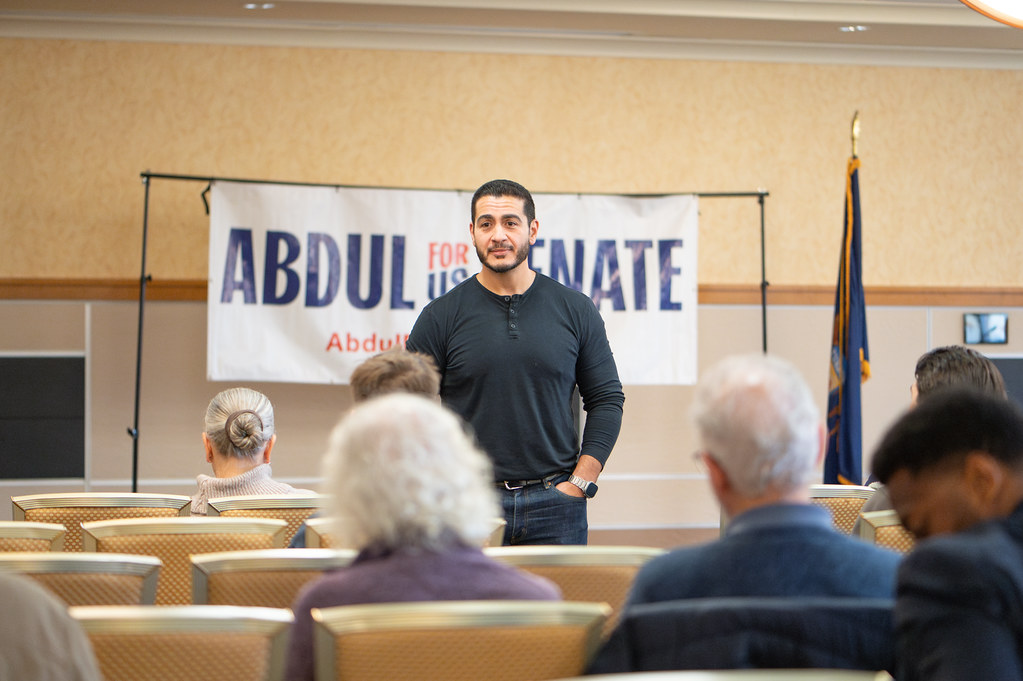
Michigan Senator-elect Abdul El-Sayed (D-MI) hasn’t even taken the oath of office yet, and he already wants a seat at every family’s holiday table.
He recorded a selfie-style video in a white ball cap in front of a bookshelf and posted it to X just ahead of Thanksgiving. The caption told viewers exactly who he had in mind. “A note of encouragement as you prepare for that conversation with that one uncle you only see on Thanksgiving,” El-Sayed wrote.
That one uncle. Everybody knows the type. The fella who still takes the paper, watches Fox & Friends with his coffee, and figures Washington has no business running his doctor’s office.
El-Sayed started gently, calling the holiday “an opportunity to come together and break bread with people with whom you might not have had a lot of conversations in the past.”
He even admitted the talk can run hot. “And sometimes those conversations can get, well, a little bit spicier than the Thanksgiving meal, and I know that this has caused a lot of anxiety,” he said.
Nothing wrong with any of that. Grandma has been saying the same thing since the Carter administration.
But El-Sayed couldn’t make it to the gravy boat without naming a culprit.
“You know, Donald Trump has one neat trick,” El-Sayed said. “It’s the ability to tear us apart, to become the subject of every conversation, and to force us to take sides.”
So the trouble at the table, according to the man preaching togetherness, is the President who won the popular vote in 2024. That’s an odd way to extend a hand to the uncle who voted for him.
The Unity Video Doubled as a Health Care Commercial
El-Sayed told families to hunt for common ground “as an exercise in healing our civics.” Then he went right ahead and picked the common ground for them.
Smack in the middle of a message about passing the stuffing in peace, the incoming Democrat slipped in a plug for the single-payer scheme he rode into office.
“You might believe in ‘Medicare for all’ because you believe in empathy, but you might also believe in ‘Medicare for all’ because you believe in duty,” he said, “but I think it’s by finding the least common denominator, the things that we agree on, that help us to address where we disagree in a much more agreeable way.”
Look at the menu he set out. Viewers could support Medicare for All out of empathy. Or they could support it out of duty. Opposing it never made the list.
That isn’t common ground. It’s a multiple-choice quiz where every answer reads “yes.”
And the phrase he reached for sounds a little too honest. In everyday speech, the least common denominator describes the cheapest appeal that works on the most people. Strange choice for a sales pitch, but hard to call it inaccurate.
The timing fills in the rest. President Trump told the New York Post in a 45-minute Oval Office interview that he plans to sit down with El-Sayed about the plan the Michigan Democrat wants to rebrand as “Trumpcare.”
Trump called him “a smart guy” and left the door open. “Maybe there’s some place in the middle that we could go,” the President said. He also made clear that “Obamacare hasn’t worked.”
That’s the author of The Art of the Deal doing what he always does, listening to every pitch in the room. But hearing a pitch and signing a bill are two very different things.
El-Sayed sounds eager. He told Politico’s Playbook he’s “looking forward to a conversation” with Trump, adding, “Even President Trump understands that something’s got to be done.”
Put the pieces together, and the holiday video starts to look less like a greeting card and more like a recruiting drive. El-Sayed wants the nieces and nephews to work on the uncle before the freshman ever walks into the Oval Office.
That One Uncle Already Knows Who Pays the Bill
Here’s what El-Sayed gets wrong about the uncle. Plenty of men like him coached Little League, drove a neighbor to chemo appointments, and dropped a check in the collection plate every Sunday.
He doesn’t lack empathy. But his quarrel centers on two questions El-Sayed never asked: who pays, and who decides.
And on the duty question, the uncle already did his part. He paid into the system for forty years. Government doesn’t create a single dollar of wealth. It takes money from a paycheck, a farm, or a small business and hands it to somebody else, and every dollar it grabs stops working in the private economy.
The British have run the experiment El-Sayed wants for nearly eight decades. At the end of September 2026, NHS England had an estimated 7.38 million treatments waiting to be carried out, tied to roughly 6.24 million patients, according to official figures the PA news agency compiled. The British Medical Association counted around 2.52 million patients who had already waited longer than 18 weeks.
That’s what a single-payer system does when the money runs short. It doesn’t mail a bill. It hands out a place in line.
El-Sayed has lined up with more than a dozen senators demanding passage of Bernie Sanders’ Medicare for All Act. The uncle would rather see families control their own health dollars through bigger health savings accounts, doctors who post their prices up front, direct primary care memberships for a flat monthly fee, and insurers forced to compete for customers across state lines.
And nobody needs a selfie sermon to sell an idea like that. It sells itself at the kitchen table.
Michigan Families Remember Who Really Emptied the Chairs
El-Sayed wants Americans to believe one man forces families to pick teams. But his own record tells a different story.
Earlier in November, he took to X and suggested that US Senator John Kennedy (R-LA) spells his last name with three K’s, all because Kennedy asked who would pay for the plan. A man who answers a budget question with a Klan crack sits in a poor spot to lecture the country about civil conversation.
Perhaps El-Sayed honestly believes a turkey dinner can heal the country. It’s possible. But a man who only wanted peace at the table wouldn’t name a villain and plug a bill in the same short video.
Michigan families also remember the last time somebody in power decided what Thanksgiving should look like.
In November 2020, Governor Gretchen Whitmer’s health department capped indoor gatherings in private homes at 10 people from no more than two households and kept the rule in place right through the holiday.
“If you are considering spending Thanksgiving with people outside of your household, I urge you to reconsider,” Whitmer said when she announced the crackdown.
Then-state health director Robert Gordon later bragged about the results. “At Thanksgiving, most Michiganders sacrificed and avoided family get-togethers,” he said.
El-Sayed cheered lockdowns from the sidelines during the pandemic. But now he wants credit for bringing families back to the table.
And come January, his party controls both chambers of Congress. The “common ground” language in this video previews the script. Anybody who refuses to put Washington in charge of the family doctor will get painted as the divider who forced everyone to take sides.
Back in 2020, seating a third household at a Michigan Thanksgiving table could earn a misdemeanor charge. Nobody in Lansing recorded a selfie video blaming the government for the empty chairs that year.
Sources: New York Post; Al Jazeera; Newsweek; Bloomberg Government; Tampa Free Press; Metro Times; Michigan Department of Health and Human Services; National Law Review; PA news agency via The Irish News; British Medical Association